



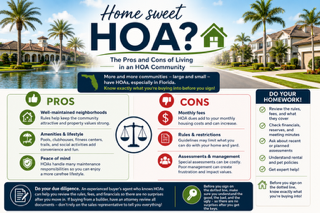
Sweet HOA? The Pros and Cons of Living in an HOA Community
More and more communities — large and small — have homeowners associations, especially here in Florida. For many buyers, an HOA can offer attractive amenities, well-maintained surroundings, and a more carefree lifestyle. For others, the fees and restrictions can be a deal breaker.
The important thing is to understand exactly what you are buying into before you sign a contract.
An HOA isn’t automatically good or bad. What matters is whether the particular association is well managed, financially sound, and a good fit for the way you want to live.
What Does an HOA Actually Do?
- A homeowners association is responsible for managing certain aspects of a community. Exactly what it handles varies considerably from one neighborhood to another.
- The association may maintain common areas, landscaping, community entrances, roads or sidewalks, recreational facilities, and other shared property. It may also establish and enforce rules regarding the appearance and use of homes within the community.
Homeowners typically pay monthly, quarterly, or annual dues to cover these expenses. That can sound simple, but the details matter. Two communities with similar-looking homes and similar HOA fees can offer very different levels of service and have very different financial situations.
The Benefits of Living in an HOA:
- Well-Maintained Neighborhoods - One of the primary reasons buyers choose HOA communities is appearance. Rules concerning landscaping, exterior maintenance, parking, fences, paint colors, and other visible features can help keep a neighborhood looking attractive and consistent. If you take pride in maintaining your property, you may appreciate knowing that your neighbors are expected to meet similar standards.
- Recreational Facilities and Amenities In Florida, amenities can be a major part of the HOA lifestyleDepending on the community, residents might have access to:
- Swimming pools and clubhouse
- Fitness centers
- Pickleball and tennis courts
- Walking and biking trails
- Golf or other recreational facilities
- Social activities, clubs, and community events
- Gated entrances or other community services
For some buyers — particularly those looking for an active or 55+ lifestyle — these amenities are a significant part of the appeal. But remember: you are paying for them. If you don’t expect to use the facilities, consider whether the HOA fee still makes sense for you.
HOA Rules: Protection or Restriction?
This is where buyers’ opinions about HOAs often differ. HOA rules can protect the appearance and character of a neighborhood. At the same time, those same rules can limit what you are allowed to do with your own property.
Restrictions may address things such as exterior paint colors, landscaping, fences, sheds, recreational vehicles, boats, commercial vehicles, pets, parking, holiday decorations, rentals, and even how long your garage door can remain open.
Some communities are relatively relaxed. Others have extensive rules and actively enforce them.
Don’t assume you’ll be able to do something simply because you own the property.
If having a particular type of fence, parking your pickup truck in the driveway, renting your home, or making exterior modifications is important to you, find out whether it is permitted before you buy.
HOA Fees — Look Beyond the Monthly Number
Buyers naturally want to know, “How much is the HOA fee?” That’s important, but it shouldn’t be the only question. You also need to know what the fee includes.
One community’s fee might cover little more than common-area maintenance, while another might include lawn care, irrigation, cable, internet, security, recreational facilities, or other services. Buyers should also investigate whether fees have increased significantly in recent years and whether additional increases are anticipated.
And then there are special assessments. If an association doesn’t have sufficient reserves to pay for a major repair or unexpected expense, homeowners may be assessed additional money. Depending on the circumstances, that assessment could be substantial. A low HOA fee isn’t necessarily a bargain if the association has inadequate reserves or deferred maintenance.
The Board of Directors Matters. An HOA is generally governed by a board of directors, often made up of homeowners who volunteer their time. A competent board can be a tremendous asset. Good boards communicate clearly, maintain appropriate reserves, plan for future expenses, enforce rules consistently, and make decisions with the long-term interests of the community in mind. A poorly managed board can create an entirely different experience.
Before buying, it’s worth learning how the association operates. Meeting minutes, budgets, financial statements, pending litigation, planned projects, recent assessments, and other association documents can provide valuable insight.
The goal isn’t simply to determine whether the HOA has enough money today. You want to understand whether the association appears to be responsibly planning for tomorrow.
Buying New Construction? Don’t confuse the builder’s representative with your representative. This is particularly important when purchasing directly from a builder. The salesperson in the builder’s sales center represents the builder’s interests, not yours. That doesn’t mean the representative won’t be helpful or professional. It simply means buyers shouldn’t expect the builder’s representative to independently identify every provision in the HOA documents that might be unfavorable or important to them.
There can also be additional considerations in a new community. The builder or developer may initially control the HOA, and fees, services, rules, and responsibilities can evolve as the development grows and control eventually transitions to homeowners. If you’re buying new construction, having your own experienced buyer’s agent can be extremely valuable. However, DO NOT visit the site without your agent! If you do, you will lose your right to representation. And when it comes to interpreting contracts, declarations, covenants, restrictions, or other legal documents, consult a qualified attorney.
Do Your Due Diligence Before You Buy
Don’t wait until moving day to discover that your boat can’t be parked at your house, your dog doesn’t meet the community’s requirements, your fence needs approval, or an assessment is coming.
An experienced buyer’s agent who understands HOA communities can help you identify the questions that need to be asked and the information that should be investigated. Depending on the property and community, that may include reviewing HOA fees and what they cover, rules and restrictions, budgets and reserves, recent meeting minutes, pending or recent special assessments, recreational facilities, rental and pet restrictions, and planned changes within the community.
Legal and financial documents should also be reviewed by the appropriate attorney, accountant, or other qualified professional when necessary.
So, Is an HOA Right for You? There isn’t one right answer. Some homeowners love the convenience, amenities, activities, and appearance of an HOA community. Others would gladly give up the community pool in exchange for fewer restrictions and more control over their property.
The question isn’t simply “Is there an HOA?” The better questions are: Is this HOA well managed?What am I paying for? What restrictions will affect me? And does this community fit the way I want to live?
A beautiful house can get your attention, but you’re buying more than the house. You’re also buying into the community, its rules, its financial obligations, and its lifestyle.Before you sign on the dotted line, make sure you understand the good, the bad, and the ugly — so there are fewer surprises after you get the keys.
Sounds like a lot? Contact me anytime and I'll be happy to help you undestand and compare HOAs so you have the information you need to make the decision that's right for you.